8383
8383
8383
The NSIF Strengthens its Investment Strategy in line with ISSA Standards
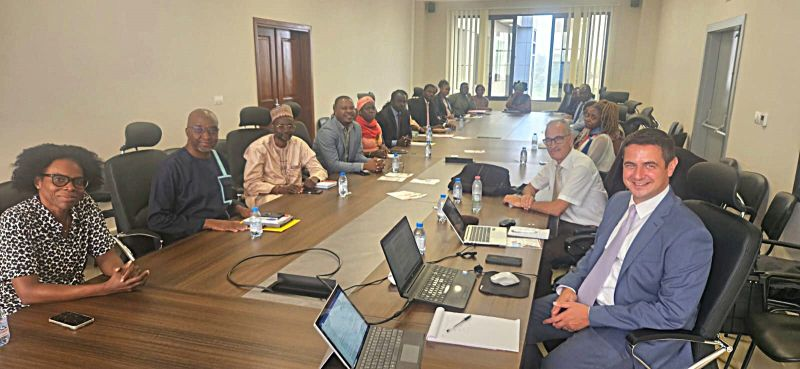
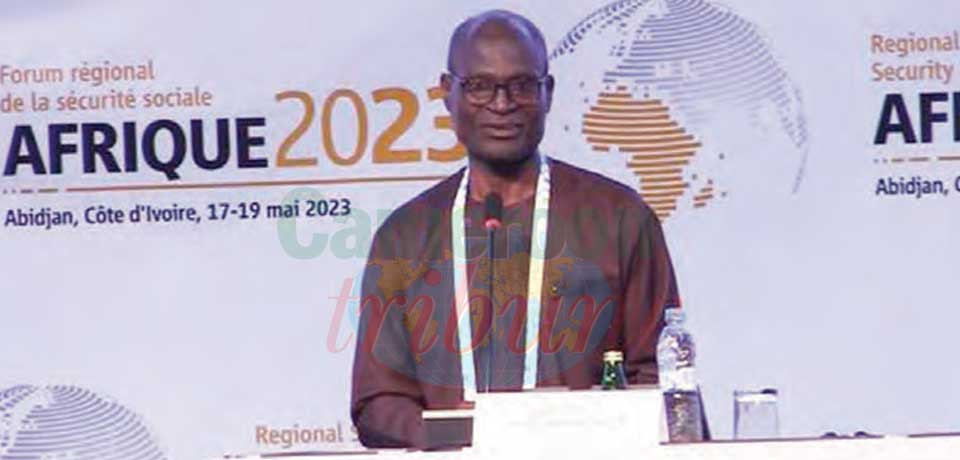
The Board Members of Cameroon's National Social Insurance Fund (NSIF) met on Tuesday, the 25th of November 2025 at the Mbalmayo International Conference Centre (CICM) for a strategic training session dedicated to the International Social Security Association (ISSA) investment guidelines.
The session began with a minute of silence in honour of the late Rosalie Mbarga, who represented the Ministry of Justice on the Board of Directors. Until her recent passing, she also served as President of the Reprieve Committee, where her dedication, rigor and strong sense of public service left a lasting mark on the Institution.

Delivered with technical support from Harvest Asset Management, the training forms part of the NSIF’s ongoing commitment to improve and professionalise the management of social security funds. It aligns with ISSA standards, widely recognised as an international benchmark for governance, prudential management and the performance of social protection systems.
The ISSA reference framework outlines seven key principles for responsible and sustainable fund management. These include clear and well-documented investment convictions, robust governance with a strict separation of roles between the Board, the investment committee and management, rigorous risk management supported by scenario analysis and stress testing, controlled portfolio diversification, integration of ESG/SRI criteria, transparent and regular reporting, and strict due diligence in both internal management and outsourcing processes. These principles are essential for Social Security Institutions, which must ensure liquidity, manage institutional risks effectively and remain accountable to citizens and public authorities.

During the exchanges, attention was also given to ISSA’s specific recommendations for African social security funds. These focus on strengthening governance independence, progressively diversifying assets, establishing a controlled risk budget, investing prudently in high-impact national projects such as infrastructure, health and education, and enhancing transparency through regular and accessible communication. These recommendations are fully aligned with NSIF’s strategy to build trust among insured persons and ensure disciplined, efficient and transparent management of its investments.

For the NSIF, investment is a key driver in ensuring the long-term sustainability of resources. It helps secure the uninterrupted payment of benefits and supports the overall stability of the system. Diversification across real estate, financial markets and infrastructure, combined with strengthened risk-management tools, contributes significantly to the resilience of the scheme.

This training session comes at a pivotal moment, marking an important step toward aligning national practices with global standards. The ultimate objective remains clear: guaranteeing security, liquidity and sustainable returns, which are the three pillars that underpin the investment mission of a modern and high-performing Social Security Institution.
Voluntary Insurance Showcased at FETUC 2025
During the 14th edition of the Cameroon University Students’ Forum (FETUC), held from the 17th to the 19th of November 2025 at the Higher Teachers Training College (HTTC) in Yaounde, the National Social Insurance Fund (NSIF) is encouraging students to begin planning for their retirement as early as possible.

Beyond providing institutional support, the NSIF aims to promote youth leadership and foster a culture of social security by offering Voluntary Insurance at FETUC 2025. This initiative aligns with the event’s theme: ‘Entrepreneurial University, student-entrepreneur status and artificial intelligence: issues, challenges and opportunities’.
The opening ceremony, presided over by the Secretary General of the Ministry of Higher Education on the 18th of November 2025 in the 300-seat amphitheatre of HTTC, laid the foundation for an extended awareness campaign targeting students from Cameroon’s public and private universities, encouraging a dynamic youth committed to securing their future.
After the formal proceedings, which included speeches and presentations by university professors, participants visited the various public stands, including that of the NSIF. The stand was staffed by teams from the Social Insurance Centre for the Informal Sector, Yaounde (CPSSIY). Visitors were briefed on the benefits of subscribing to Voluntary Insurance, the process of transitioning to another social security scheme upon gaining employment, and the conditions for registration. Beautifully set up at the heart of the esplanade, the NSIF stand attracted numerous students, curious and conscious of the importance of safeguarding their retirement while also ensuring access to social benefits for their future employees, thanks to the Institution’s state-of-the-art digital tools.

FETUC, first held in 2017, is a platform that promotes a culture of dialogue and leadership among Cameroonian youths. It serves as a forum where students are empowered to contribute strategically to the development of Cameroon.
As the State’s principal instrument for ensuring citizens’ social protection, the NSIF actively supports these dynamic youths who recognize not only the importance of entrepreneurship but also the need to pursue it in a structured and sustainable manner.
Honoring African Literature: the NSIF at the heart of cultural excellence!
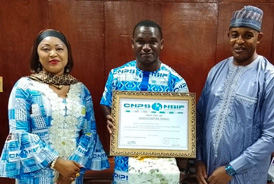
The 33rd International Day of the African Writer- held at the Lycée Général Leclerc; precisely in the Salle des Actes-was marked by an honorary distinction awarded to the Top management of the Cameroon's Social Security Institution for their noteworthy engagement in promoting Cameroonian and African literature, by the Centre de lecture d'intitiation et d'intégration à la culture (CLIIC).
The African Literature day celebrated on the 7th of November globally-which highlights the richness, solidarity and diversity of the continent's literary heritage-unfolded in several stages including: a series of reading and writing conducted by distinguished authors; followed by a conference dedicated to the literary legacy of Professor Charles Binam Bikoï entitled: ‘La plume de la promotion des langues africaines’. It also featured an exhibition of African writers, a reading loud contest and concluded with awards presentation.

This latest distinction is yet another feather in the cap of the NSIF. Received on behalf of the Director General by the Director of Human Resources, Nana Bello, it highlights his unwavering dedication to celebrating African—and specifically Cameroonian—culture. Whether through the regular Literary Cafe, the creation of libraries within the NSIF structures, support for literary publications, or storytelling sessions that bring joy to children, he has made culture not just an accessory, but a vibrant part of the Institution’s identity.
A new landmark Project for the National Social Insurance Fund (NSIF)
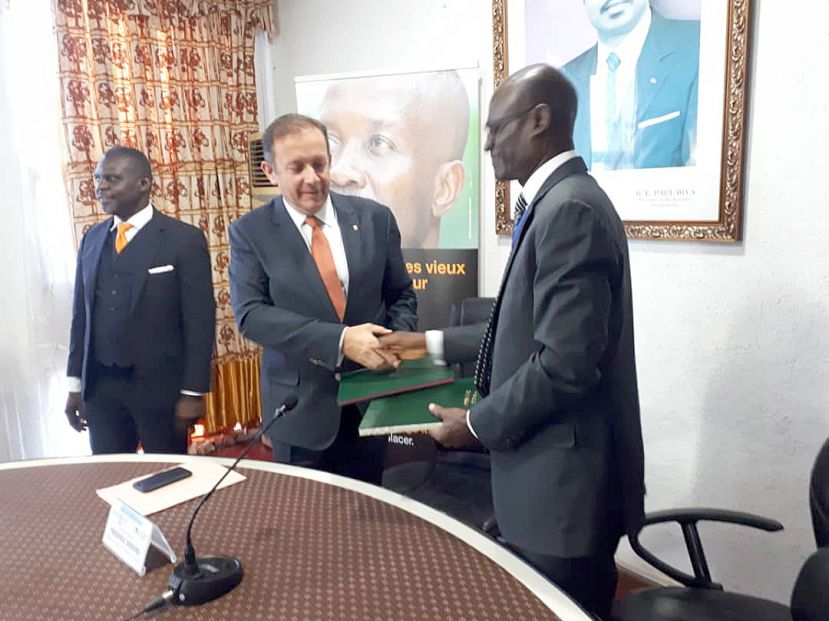
With the project of developing a shared mineral terminal at the deep-sea Port of Kribi-designed at enhancing operational efficiency and facilitating mineral exports- the Cameroon's Social Security Institution, alongside the relevant operators, signed a Memorandum of Understanding (MoU) on Tuesday, the 4th of November 2025.

The Cameroon's National Development Strategy, in compliance with the Structural Transformation and Inclusive Development has reached an important milestone. As a point of fact, a strategic partnership-aiming at defining the technical, legal and financial structure of the project- has been signed between the NSIF, the Port Authority of Kribi (PAK) and the BESTWAY FINANCE LTD/AUSTSINO RESOURCES GROUP LTD Consortium, as well as the company G-STONES. According to the Director General (DG) of the NSIF, ‘relating to the wish of the President of the Republic, the Institution is driven with the need of contributing to the construction of a major infrastructure intended to facilitate the extraction of mineral resources (mining) in our country. This will partly benefit our economy and on the other hand, create thousands of jobs and improve the coverage rate of the social security scheme.’
A vision shared by the other signatories of the MoU. ‘Bringing together all these operators around the port of Kribi, was crucial. As for the questions when and how? We are now ready to work,’ said the General Manager of the Port Authority of Kribi. The Chief Executive Officer (CEO) of Bestway Finance confirmed that operations are imminent: ‘We are in the final preparatory stages before the actual launch of our production, scheduled for December 2025’.

A lever for sustainable growth
Beyond its infrastructure, this mineral terminal is part of a strategy aimed not only at job creation but also at strengthening national logistics and ensuring economic sustainability. This reflects the NSIF’s dedication to diversifying investments in high-potential sectors to strengthen its financial reserves, without compromising its primary mission of social protection.

It is now essential for stakeholders to unite their efforts to realise this strategic logistics hub serving the extractive industries and global trade. This is all the more important given that it will permanently transform the southern coastline of the country and ‘seal Cameroon's real development for decades to come’, according to the NSIF's Top Manager.
A crucial concern for all!
This multi-step process goes far beyond a few consumables; it is a complex and well-structured process, carefully implemented across the NSIF healthcare facilities.

Hospital/medical waste management refers to all processes which involves sorting, collecting, treating and disposing all sort of waste-be it hazardous or non-hazardous waste (medical or common waste)- by health facilities, with the main goal of protecting healthcare workers, patients and the public, in compliance with environmental protection regulations.
A multi-phase and complex process.
Waste generation and source segregation constitute the first line of defence. With the numerous department a hospital is made up of, added to the different types of wastes they generate per day-which may complicate the process- the first step consists of separating them at the point of production.
On average, 85% of hospital waste is common waste, comparable to household waste, while 15% is hazardous waste (infectious, chemical, or radioactive).
Safety is the sine qua non for successful management, and it all starts with rigorous sorting:
-In hospitals, non-hazardous waste is handled similarly as domestic waste and can be recycled or disposed of in conventional sorting centres.
- On the other hand, hazardous waste is collected in rigid containers or specially designed bags. It must be temporarily stored in a secure location and separated from the ordinary waste stream, to prevent any risk of contamination. The disposal of these waste into sewers, regular bins, conventional recycling systems, or through mechanic compaction is strictly prohibited. Its transport and treatment require special precautions, including incineration, sterilisation or disinfection in specialised internal or external facilities prior to final disposal.

Why all these precautions?
It’s about protecting public health. Improper disposal of medical waste, particularly infectious waste, can lead to the spread of serious diseases. This is because it poses a direct risk to health workers, patients, the public, visitors and waste collectors.
Environmental protection is also crucial, as hazardous waste can contaminate soil, water and air. A meticulous management helps limit pollution and preserve natural resources.
A well-defined legal framework
In Cameroon, waste management is governed by Decree No. 2012/2809/PM of the 26th September 2012, which sets out the conditions for sorting, collection, storage, transport, recovery, recycling, treatment and final disposal of waste, with the provisions specified in Article 33. In addition, Order No. 003/MINEPDED of the 15th October 2012 classifies medical and pharmaceutical waste as category II waste and defines the specific conditions for its management. Healthcare facilities are therefore legally required to comply with these requirements in order to ensure a safe and standard-compliant management.

Towards a circular economy approach
Beyond safety and regulation, hospital waste management is now moving towards a circular economy approach, aiming to reduce consumption and waste of resources. This approach involves reducing waste at source, recycling materials (paper, plastic or metal) and raising staff awareness of eco-friendly practices. This approach not only helps to protect the environment, but also saves money by reducing the costs associated with purchasing raw materials and treating waste.